Introduction
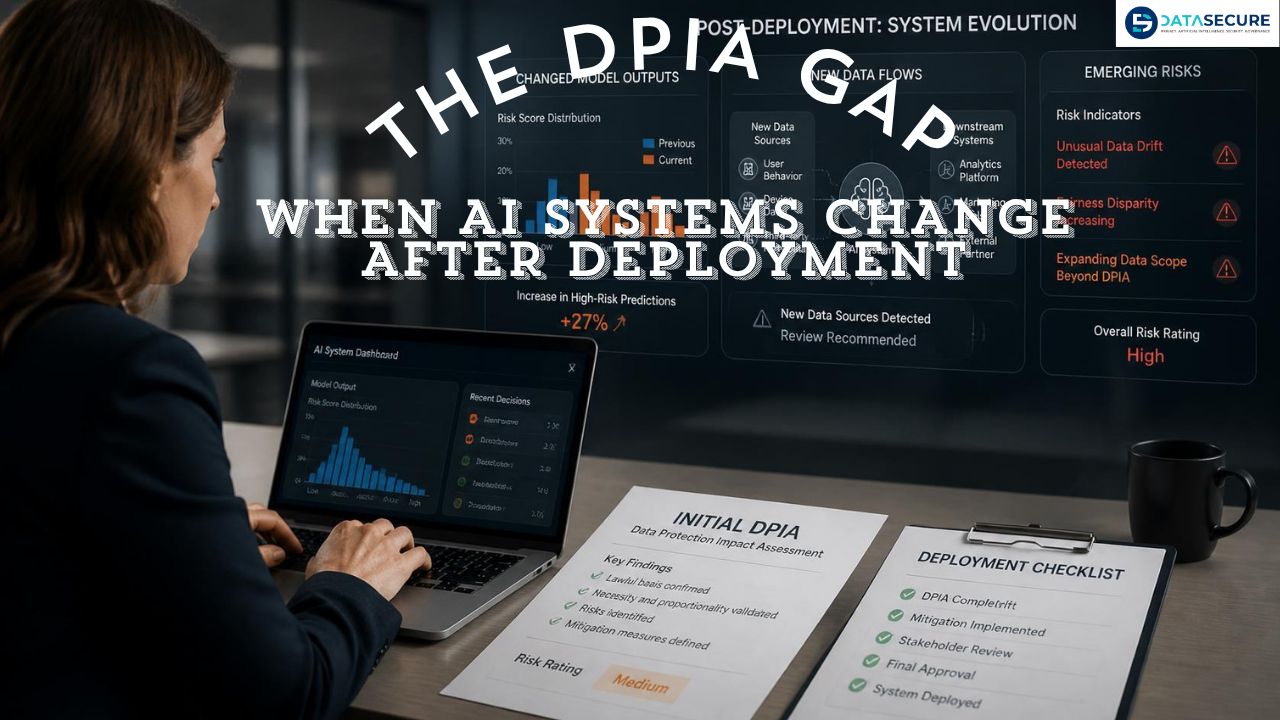
A Data Protection Impact Assessment (DPIA) is a formal record that helps organizations systematically identify, analyse, and minimize privacy and data protection risks before launching a project, system, or process that handles personal data. DPIAs are legally capable of being living assessments, but organisational DPIA processes are often operated as point-in-time documents. AI exposes the consequences of that mismatch. AI systems evolve too continuously for that assumption to hold in practice. It's been retrained on new data, or the vendor pushed an update that wasn’t reviewed, or a product team quietly connected it to a new data source to make it "more useful." None of that shows up as a line-item change in a project plan the way a new IT system rollout would. It shows up as a shift in outputs and by the time anyone notices, the DPIA on file describes a system that no longer exists. This is the actual DPIA problem with AI.
A Point-in-Time Document, An Evolving System
The problem becomes clearer when change does not come from a deliberate product decision. An AI system, by contrast, can shift its risk profile without any human decision at all. Data drift, for example, can alter the statistical properties of incoming data as customer behaviour, product mix, or user demographics change. The system may therefore begin producing different outputs without anyone formally changing its stated purpose or approving a new processing activity.
The Specific Ways an AI System Stops Matching It's DPIA
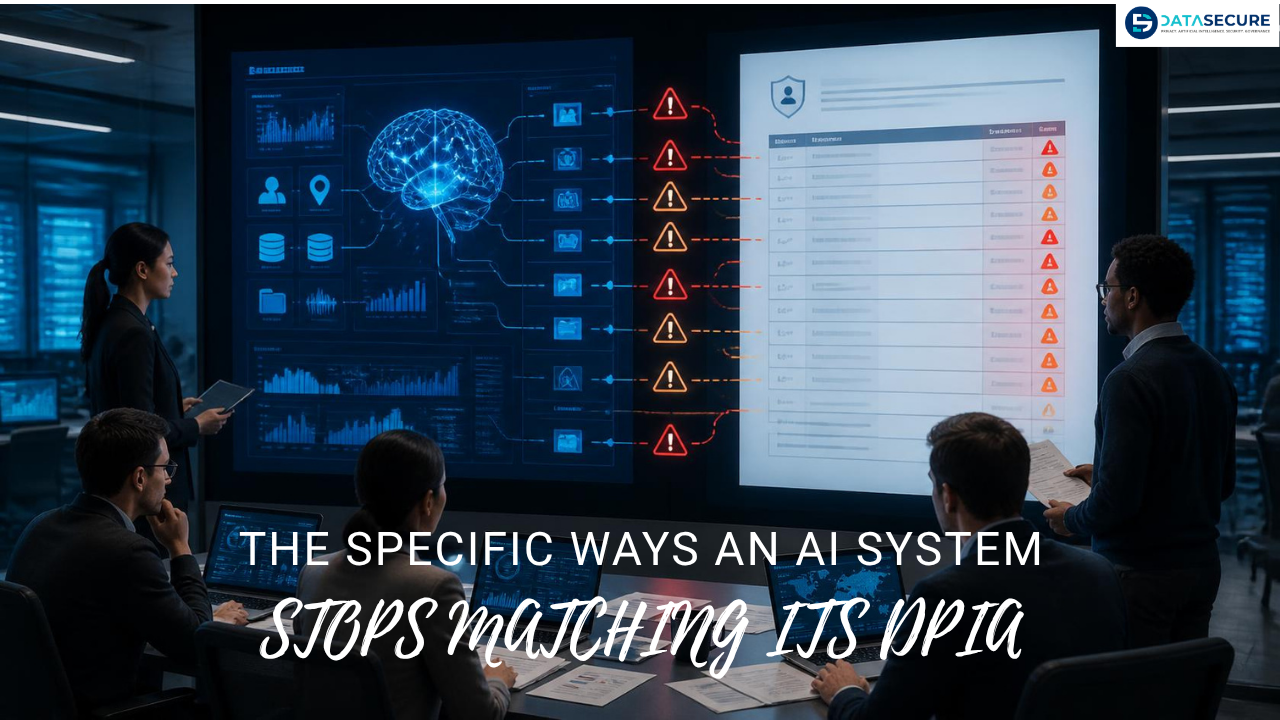
A few patterns show up repeatedly, and it's worth naming them individually because each demands a slightly different response.
Model and version changes
Retraining, fine-tuning, continuous learning, and model-version upgrades can alter how an AI system processes personal data even where its stated purpose remains unchanged. A fraud-detection model retrained on six months of additional transaction data, for example, may develop a materially different error profile and therefore affect individuals differently. The same issue arises with third-party AI providers. If a vendor updates or retrains the underlying model, the organisation may find itself assessing a version that did not exist when the original DPIA was completed. The governance challenge is therefore not limited to changes made internally: the DPIA must also account for material changes controlled by vendors.
If you're consuming a third-party foundation model or an AI feature embedded in SaaS software, the vendor can update the underlying model, retrain it, or change its behaviour on their own release schedule with or without notice to you.
Behavioural change without a stated purpose change
This is often the change that slips through governance most easily. The purpose recorded in the DPIA, such as “summarising customer support tickets,” may remain completely accurate while the system’s behaviour changes over time. The model may begin surfacing more sensitive inferences, handle edge cases differently, or become more confident while producing less reliable outputs. None of these changes necessarily alters the stated purpose, but they can materially alter the risks associated with the processing. A review based only on whether the documented purpose has changed can therefore miss changes that occur in how the system actually behaves.
Changes to data sources, inputs, and retrieval systems
Privacy risk can also change without any modification to the underlying model. Adding a new dataset, document repository, API, or retrieval source can expand the personal data available to the system and what it can surface in its outputs. Similarly, granting an agent new tools or broader permissions can change what the system is capable of accessing or doing.
This is particularly important for agentic systems, where the privacy boundary is determined not only by the model but by the data and tools connected to it.
Use-case expansion
A model approved for a specific internal use may later be extended to a customer-facing use case, or an agent initially given limited tools may be granted broader access to make it more useful. While the underlying architecture may remain unchanged, these changes can alter who is affected, what data is processed, and how the system's outputs are used. Each may seem like a routine product decision, but together they can materially change the risk assessed at the time of the original DPIA.
The compound version: model drift, data drift, and use-case drift together
The more difficult cases arise when several forms of drift occur at the same time. Model drift refers to changes in how the model performs over time, data drift to changes in the data it receives or learns from, and use-case drift to the system being used in ways, contexts, or for groups that were not part of the original assessment. Individually, each change may seem minor, but cumulatively they can alter who is affected, how the system operates, and the risks it creates. The result may be a system whose actual risk profile bears little resemblance to that assessed at deployment.
This creates another problem for DPIA governance: material change may not arrive as a single identifiable event. It can emerge incrementally, as a series of routine changes gradually moves the system away from the assumptions on which the original assessment was based. Organisations therefore need to consider cumulative change, not only whether any individual modification crosses a review threshold.
Deciding What Counts as a Trigger"
Not every change warrants a full reassessment, and treating every model update as a reason to redo a DPIA from scratch is not only a duplication of effort but also not sustainable in the long run. The useful distinction is between a technical change and a privacy-relevant change and it has to be defined in terms specific enough that an engineer would actually recognise it before shipping, not left as a vague reference to "purpose or means."
A change should therefore be assessed against factors such as:
- Does it change the personal data processed or the sources from which data is obtained?
- Does it materially change model performance or error patterns?
- Does it expand who is affected or how outputs are used?
- Does it introduce new capabilities, tools, or access permissions?
- Does it alter existing safeguards or assumptions relied upon in the original DPIA?
On that basis, retraining on a materially different dataset, introducing a new data source, expanding the system to a new population, or granting an agent new access could warrant reassessment. A patch that improves latency without affecting inputs, outputs, performance, or safeguards generally would not
A patch that improves latency without changing the system's inputs, outputs, or accuracy profile would generally remain a technical change. By contrast, retraining on a new or materially larger dataset, fine-tuning for a new audience, a material shift in accuracy or error rates, introducing a new data source, or extending the system to new categories of data subjects can alter the privacy risk profile and should trigger reassessment where they materially alter the system's risk profile.
The practical gap is therefore not the absence of legal trigger, but the lack of clear operational criteria for determining when a system change materially affects risk.
Where the Accountability Gap Sits
The reason this keeps slipping isn't a lack of legal clarity. The DPO's office owns the DPIA. The security or product engineering teams may own the retraining schedule, the model version history, and the monitoring dashboards that would actually reveal drift. Unless those two functions are structurally linked, a model can be retrained and redeployed without even relevant stakeholders and functions being aware of a new processing operation.
The same gap extends outward to vendors. If a third-party AI provider updates or retrains the model underlying your product, your contract needs to obligate them to tell you ideally before the change goes live, at minimum on a defined cadence because you cannot reassess a change you were never notified of.
Governece Mechanisms: What a Defensible Model Looks Like in Practice
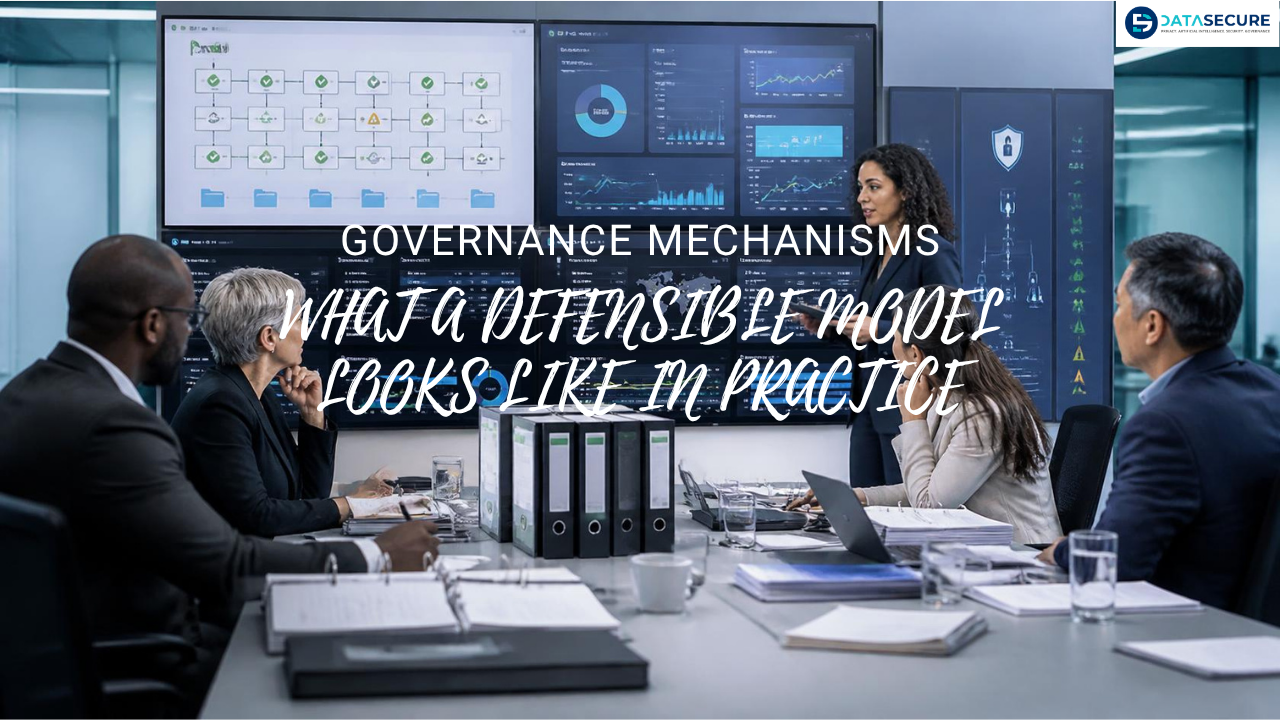
The fix is building a small number of structural links between the DPIA and the system it describes:
- Maintain a live data flow and processing map for the AI system that reflects current data sources, retrieval scope, and third-party model dependencies.
- Assign clear ownership for identifying and escalating privacy-relevant changes across DPO, product, engineering and security teams. Connect model monitoring and deployment records to the DPIA review process so that material changes do not depend on the DPO discovering them manually
- Version the DPIA alongside the model. Each material version change should produce at minimum a documented delta assessment: what changed, what new risk it introduces, whether existing safeguards still hold.
- Build vendor change-notification obligations into AI procurement contracts, covering model updates, retraining, and material behavioural changes to third-party or embedded AI features.
- Treat changes in model capabilities, permissions, or connected tools as governance events requiring assessment rather than merely technical release notes.
- For Significant Data Fiduciaries under India's DPDP Rules, 2025, use the annual DPIA requirement as a baseline rather than as a substitute for review following material changes.
- Maintain sufficient records to reconstruct which system version was assessed, what information was available at the time, and why the existing safeguards were considered adequate.
A quick self-check
1. Does anyone outside the DPO's office know what would count as a "material change" to the AI system in privacy terms?
2. If the underlying model were retrained or updated by a vendor tomorrow, would the DPO's office find out and how?
3. Is there a documented link between model monitoring or drift metrics and the DPIA review trigger, or are they tracked by two teams that don't talk to each other?
4. Can you produce, on request, a data flow map that reflects the system as it operates today rather than as it was designed eighteen months ago?
5. Do your AI vendor contracts obligate the provider to notify you of model updates or retraining and does anyone actually read those notices when they arrive?
If more than one of those has an uncomfortable answer, the risk isn't that your DPIA was not done with due diligence done rather it was done for a system that has since moved on without it.
We at Data Secure (Data Privacy Automation Solution) DATA SECURE - Data Privacy Automation Solution can help you to understand Privacy and Trust while lawfully processing the personal data and provide Privacy Training and Awareness sessions in order to increase the privacy quotient of the organisation.
We can design and implement RoPA, DPIA and PIA assessments for meeting compliance and mitigating risks as per the requirement of legal and regulatory frameworks on privacy regulations across the globe especially conforming to GDPR, UK DPA 2018, CCPA, India Digital Personal Data Protection Act 2023. For more details, kindly visit DPO India – Your outsourced DPO Partner in 2025 (dpo-india.com).
For any demo/presentation of solutions on Data Privacy and Privacy Management as per EU GDPR, CCPA, CPRA or India DPDP Act 2023 and Secure Email transmission, kindly write to us at info@datasecure.ind.in or dpo@dpo-india.com.
For downloading the various Global Privacy Laws kindly visit the Resources page of DPO India - Your Outsourced DPO Partner in 2025
We serve as a comprehensive resource on the Digital Personal Data Protection Act, 2023 (Digital Personal Data Protection Act 2023 & Draft DPDP Rules 2025), India's landmark legislation on digital personal data protection. It provides access to the full text of the Act, the Draft DPDP Rules 2025, and detailed breakdowns of each chapter, covering topics such as data fiduciary obligations, rights of data principals, and the establishment of the Data Protection Board of India. For more details, kindly visit DPDP Act 2023 – Digital Personal Data Protection Act 2023 & Draft DPDP Rules 2025
We provide in-depth solutions and content on AI Risk Assessment and compliance, privacy regulations, and emerging industry trends. Our goal is to establish a credible platform that keeps businesses and professionals informed while also paving the way for future services in AI and privacy assessments. To Know More, Kindly Visit – Your Trusted Partner in AI Risk Assessment and Privacy Compliance | AI-Nexus