Introduction
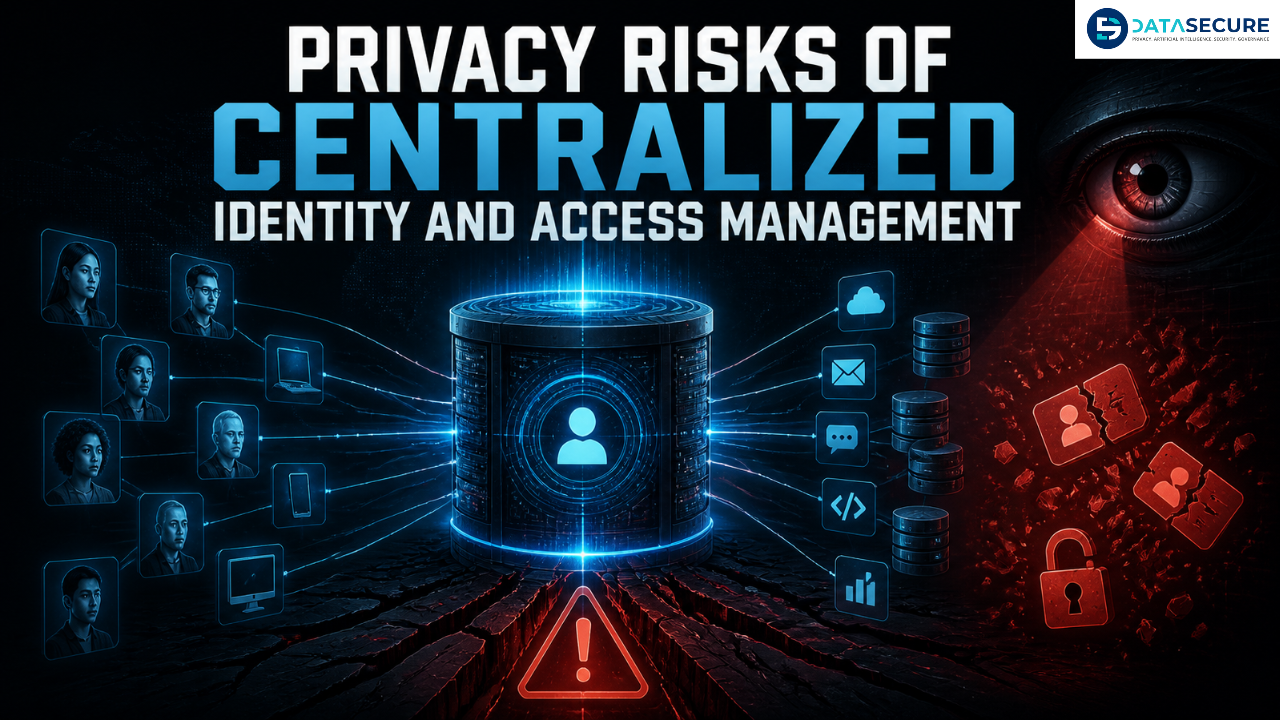
Centralized identity management enables an organisation to manage user identities and access to multiple applications through a common identity infrastructure. Single sign-on (SSO) is one implementation of this approach, allowing users to authenticate once and access multiple authorised applications without signing in separately to each. Organizations adopt SSO for sound operational reasons. NIST’s (the US National Institute of Standards and Technology) guidelines on digital identity federation describe one party, called the identity provider, that confirms who the user is and then vouches for them to the other applications. As a result, the user does not need a separate password, security code or other means of proving their identity for every application. NIST also notes that, even within a single organization, this approach centralizes account management and makes technical integration easier. This build pulls together three kinds of information about every user: who they are, when and where they sign in, and what they are allowed to access. Such systems hold profile data, authentication history, access records and often sensitive metadata in one place, from which access to many other systems is controlled. This has two consequences. A breach has a larger impact, and data minimisation becomes harder to achieve in practice.
WHAT IS A CENTRALIZED USER LOGIN?
A centralized user login is an example of federation, in essence a trusted system that authenticates a user once and shares that identity across multiple separate applications or domains without re-entering credentials. In NIST’s terms, the identity provider (IdP) passes information about the user to a number of separately managed applications, which NIST calls relying parties. This information includes how the user was authenticated, and may include details such as their name or title.
The process has three steps. The user signs in to the IdP. The IdP then sends the application a digitally signed message, called an assertion, which confirms who the user is. The application uses that message to start a session, which is the period during which the user stays logged in.
NIST adds that the IdP keeps more than a password for each person. It also records:
- federated identifiers, which are the labels used to recognise the person across applications;
- which applications may access which attributes;
- how the federated account has been used;
- any further attributes the IdP assigns.
WHY A CENTRALIZED LOGIN IS A PRIVACY CONCERN?
Primarily a centralized login introduces privacy risks on 2 fronts
(i). Visibility: Every time a user opens an application through the IdP, the IdP learns where they are logging in. Over time, NIST notes, the IdP could use this to build a profile of the person’s activity.
(ii). Control: In an enterprise setting, the organization decides which attributes will be released to each application. It does this on behalf of all users, via an approved list. Users do not choose what is shared. Responsibility for those choices therefore rests with the organization.
WHERE THE RISK SITS?
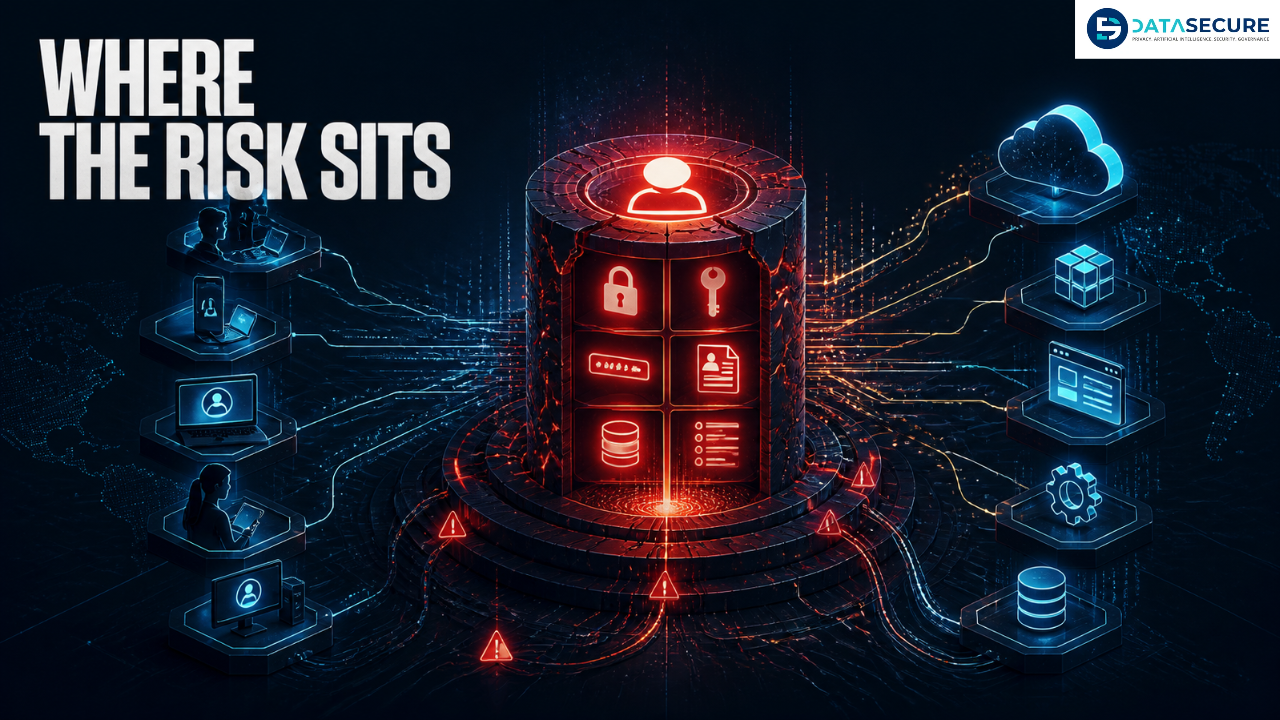
• Directory attributes shared more widely than necessary
Applications connected to the IdP may retain their own copies of the data, concentrating it across systems despite the decentralized design.
A 600-person logistics firm connects a small procurement tool. The tool needs only an email address, but it is configured to receive the full profile, including phone number, manager and office location. If that vendor is later breached, the firm's notification has to cover fields it never needed to share.
• Sign-in logs that become a behavioural profile
A sign-in log records who accessed which application and when. NIST warns that these records can reveal which applications a person uses, which allows profiling. NHI Management Group recommends limiting how long identity logs are kept.
Consider a hypothetical services firm. A department head asks IT for the first and last sign-in times of their staff over a quarter, to settle a remote-working dispute. The log was created for security. It is now being used to judge attendance. The new processing purpose has not been assessed for privacy implications or communicated to the team.
• Session tokens in support files
Following successful authentication, a website may issue or establish a session identifier or token that the browser presents with subsequent requests, allowing the server to recognise the authenticated session. An Attacker who obtains a valid token may be able to hijack the associated session without needing the password. The 2023 Okta incident shows how this can happen. BleepingComputer reports that an attacker accessed files in Okta’s customer support system that were linked to 134 customers. Some of these were HAR files. A HAR file is a recording of a browser session (HTTP network activity) that support staff often ask customers to send when diagnosing a fault. Okta’s own guidance states that such files can contain cookies and other sensitive data. In this case, the files held session tokens, and these were used to hijack the sessions of five customers. The Hacker News adds that 134 out of 18,400 customers were affected including 1Password, BeyondTrust and Cloudflare.
• The vendor and its sub-processors
When an organization outsources identity management, its data protection obligations do not end with the contract it signs with the provider. The provider may rely on other companies for hosting, technical support or service delivery, each potentially introducing additional access to personal data and another point of exposure.
The risk is not simply that a sub-processor could suffer a breach. It is that the organization may have little visibility into which third parties handle its identity data, what safeguards govern that access, or how quickly the provider must notify it of an incident. Without appropriate contractual safeguards and oversight, the organization may discover a problem too late to assess its impact or respond effectively.
Due diligence must therefore cover not only the identity platform provider, but also its sub-processors, their access to personal data and the arrangements for reporting incidents.
• Legacy accounts and over-permissioned apps
OAuth is an authorization framework that allows an application to obtain limited access to a service on a user’s behalf, subject to the permissions granted. For example, by reading their email. Each such application is granted a set of permissions. Over time, organizations accumulate old test accounts and applications whose permissions are never reviewed.
Microsoft disclosed that a group it tracks as Midnight Blizzard used password spraying (trying common passwords across many accounts), to compromise a legacy test account. The account was not used in production and did not have multi-factor authentication (MFA). The group then compromised a legacy test OAuth application that had elevated access. It created further malicious OAuth applications and used the legacy one to obtain a role that allows access to mailboxes.
• Third-party and AI integrations with standing access
The Hacker News reports that Google Threat Intelligence Group and Mandiant observed stolen OAuth and refresh tokens associated with the Salesloft Drift AI chat agent being used to breach customers' Salesforce instances. The organizations had authorised the integrations; the compromise involved the vendor’s tokens.
The privacy risk arises when users grant third-party applications access to corporate data without adequate oversight. For example, a marketing manager connects an AI meeting-notes tool to their corporate account and authorises access to email and calendar data. If these consent grants are not reviewed and the vendor has no appropriate data processing agreement with the organization, personal data can flow to a third party without adequate contractual safeguards or visibility.
• Data that remains after a user leaves
NIST’s federation guidance addresses two distinct responsibilities: removing application accounts when a person’s primary account is terminated, and specifying retention policies in agreements between participating parties.
However, ending access does not automatically resolve what happens to the associated personal data. Sign-in histories, device records and recovery details can persist in the identity provider and connected analytics tools, sometimes without a defined deletion date. This can leave an organization unable to identify all records relating to a former user, contractor or customer when responding to a data access request.
THE ORGANIZATIONAL CONSEQUENCES
Technical containment is only the start.
As an organization you depend on the vendor's information and timing.
Notification clocks start when you become aware of the breach. Under GDPR Article 33, the controller must notify the supervisory authority within 72 hours of becoming aware, where feasible, unless the breach is unlikely to result in a risk to individuals. The notice must describe the categories and approximate number of data subjects and records concerned, the likely consequences and the measures taken, and the controller must document the breach. Under the DPDP Act s. 8(6), the Board and each affected Data Principal must be informed, and the Rules (7) set an initial intimation without delay and a detailed report within 72 hours. You cannot answer those questions quickly unless you already know which attributes and logs the platform held.
Under the DPDP Act s. 8(1), responsibility stays with the Data Fiduciary irrespective of any agreement to the contrary, even when the failure was a processor's.
HOW TO IDENTIFY EXPOSURE IN YOUR ORGANIZATION?
Five questions will show whether those owners exist in practice.
- What personal data does the IdP hold, and what does each application receive?
- What do the sign-in logs record, where are the copies, who can query them and when are they deleted?
- Which third-party and AI applications have been authorised through user consent, and who approved them?
- Who can reset another user's credentials, and how are they verified first?
- If the platform were compromised today, could you tell which users and which category of data were in scope within 72 hours?
HOW ORGANIZATIONS CAN MITIGATE THESE RISKS?
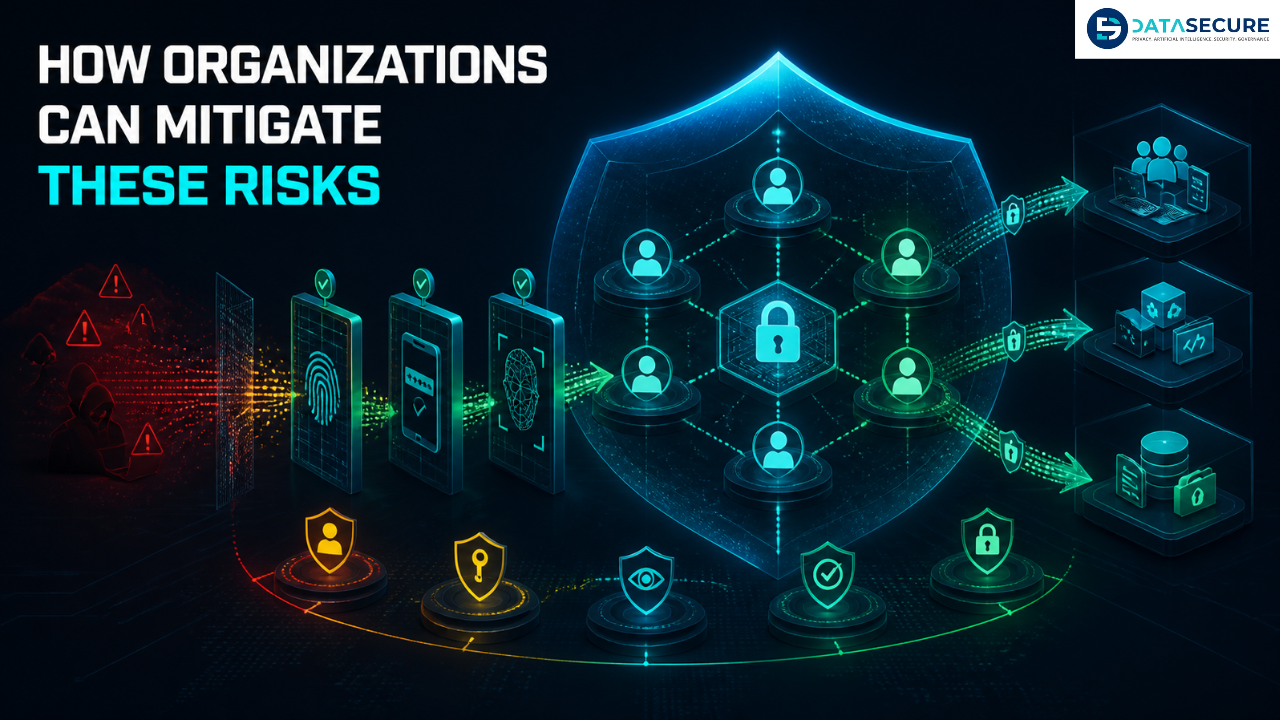
- Minimise attribute disclosure: Identity providers should support derived attribute values and pairwise pseudonymous identifiers to reduce unnecessary disclosure and cross-application tracking.
- Define purpose-specific log retention: Establish retention periods according to the purpose for which identity logs are maintained, taking into account applicable statutory retention requirements and legitimate legal needs.
- Remove obsolete data and access pathways: Periodically identify and remove outdated data stores and unnecessary access permissions. Microsoft’s guidance also addresses protection against malicious OAuth applications and the implementation of multifactor authentication.
- Strengthen session security: Implement appropriate session protections, including network-based session binding where suitable. Following its 2023 security incident, Okta introduced network-zone-based session binding for administrators and advised customers to sanitise HAR files before sharing them.
- Establish contractual accountability: Contracts should address sub-processor engagement, vendor support access and breach notification obligations. Rule 6 of the DPDP Rules, 2025, also requires appropriate contractual provisions concerning security safeguards when a Data Processor is engaged.
- Provide transparency on attribute sharing: Inform users about the attributes transmitted to relying parties. NIST’s federation guidance addresses subscriber notification concerning attribute disclosure.
CONCLUSION
Centralized login is a practical choice, but its privacy risks require active oversight. Identity platforms connect personal data across systems, and device-level security alone cannot address risks arising from their configuration, integrations and access controls.
As the incidents illustrate, breaches can originate through trusted channels, requiring coordinated investigations and careful assessment of notification obligations.
Clear accountability across IT, privacy and procurement, combined with data minimisation, purpose-based retention and oversight of new uses, helps manage these risks. Identity management must be treated as a privacy responsibility, not merely a technical function.
We at Data Secure (Data Privacy Automation Solution) DATA SECURE - Data Privacy Automation Solution can help you to understand Privacy and Trust while lawfully processing the personal data and provide Privacy Training and Awareness sessions in order to increase the privacy quotient of the organisation.
We can design and implement RoPA, DPIA and PIA assessments for meeting compliance and mitigating risks as per the requirement of legal and regulatory frameworks on privacy regulations across the globe especially conforming to GDPR, UK DPA 2018, CCPA, India Digital Personal Data Protection Act 2023. For more details, kindly visit DPO India – Your outsourced DPO Partner in 2025 (dpo-india.com).
For any demo/presentation of solutions on Data Privacy and Privacy Management as per EU GDPR, CCPA, CPRA or India DPDP Act 2023 and Secure Email transmission, kindly write to us at info@datasecure.ind.in or dpo@dpo-india.com.
For downloading the various Global Privacy Laws kindly visit the Resources page of DPO India - Your Outsourced DPO Partner in 2025
We serve as a comprehensive resource on the Digital Personal Data Protection Act, 2023 (Digital Personal Data Protection Act 2023 & Draft DPDP Rules 2025), India's landmark legislation on digital personal data protection. It provides access to the full text of the Act, the Draft DPDP Rules 2025, and detailed breakdowns of each chapter, covering topics such as data fiduciary obligations, rights of data principals, and the establishment of the Data Protection Board of India. For more details, kindly visit DPDP Act 2023 – Digital Personal Data Protection Act 2023 & Draft DPDP Rules 2025
We provide in-depth solutions and content on AI Risk Assessment and compliance, privacy regulations, and emerging industry trends. Our goal is to establish a credible platform that keeps businesses and professionals informed while also paving the way for future services in AI and privacy assessments. To Know More, Kindly Visit – Your Trusted Partner in AI Risk Assessment and Privacy Compliance | AI-Nexus